

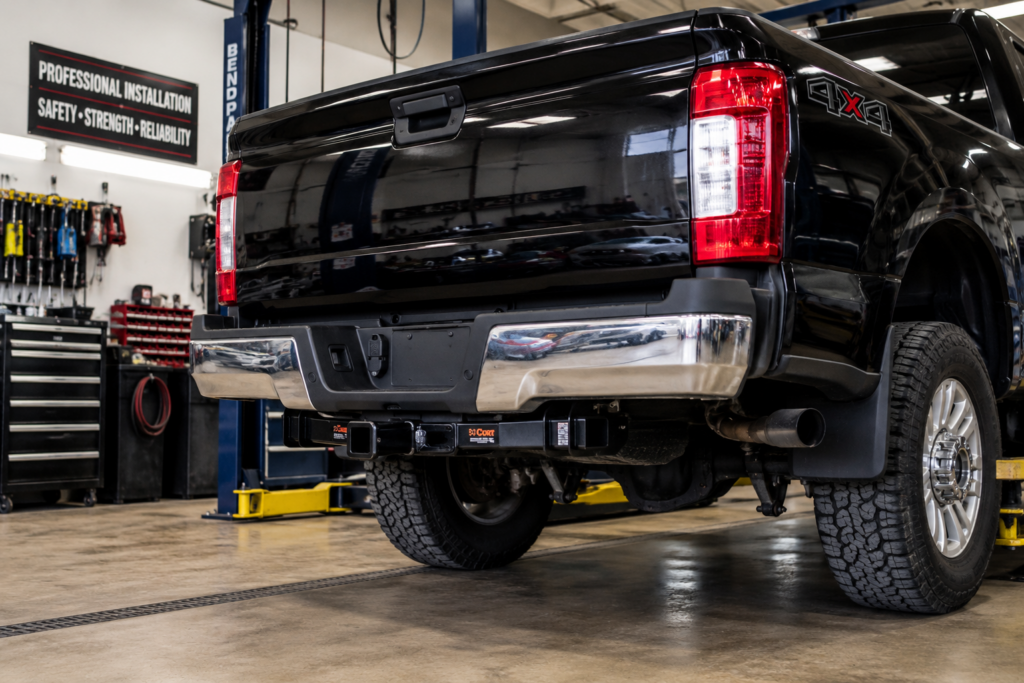
A Trailer Hitch Is Part of a Towing System
Trailer hitch installation involves more than finding equipment that physically fits beneath a truck, SUV, or commercial vehicle. The vehicle, hitch, trailer, load, and intended towing application all need to be considered as parts of the same system.
That distinction matters because a hitch that fits the vehicle is not automatically appropriate for every trailer or towing task. A contractor towing equipment between jobs has different operating requirements from an owner who only uses a trailer occasionally.
For vehicle owners and businesses in Cambridge, Kitchener, and Waterloo, a professional trailer hitch installation should begin with understanding how the vehicle will actually be used. Clarifying those requirements before equipment is selected can help prevent problems caused by an unsuitable towing setup.
Mistake #1: Choosing a Hitch Before Understanding the Towing Requirements
Starting with the hitch instead of the towing application puts the decision in the wrong order. Before equipment is selected, the vehicle owner should identify the vehicle being used, trailer type, intended use, expected load, and frequency of towing.
These factors provide the context needed to evaluate the setup. A work vehicle that regularly tows a trailer as part of daily operations may have different requirements from a vehicle used for occasional towing.
It is also important to consider whether the towing application is likely to change. Contractors may add equipment, use different trailers, or change how a vehicle is assigned within the business. Understanding the expected application provides a better starting point than selecting a hitch based only on appearance or physical fit.
The broader process of choosing the right hitch for your vehicle involves matching equipment to the vehicle and towing requirements. Establishing those requirements first helps keep the installation decision focused on the actual application.
Mistake #2: Assuming the Hitch Determines How Much the Vehicle Can Tow
Another common mistake is treating the rating of the installed hitch as the towing capacity of the entire vehicle. These are not interchangeable measurements.
Installing towing equipment with a particular rating does not automatically change the limitations established for the vehicle or other components involved in the towing system. The complete setup needs to be considered rather than using one component as the basis for the entire towing decision.
This is especially important when equipment is being replaced or upgraded. Installing different hitch equipment should not lead an owner to assume that the vehicle itself can now handle a different towing application.
Vehicle owners should verify the requirements and limitations that apply to their specific vehicle, trailer, and equipment. Manufacturer information and other applicable specifications should guide those decisions rather than assumptions based on the hitch alone.
Mistake #3: Ignoring Tongue Weight and Load Distribution
Total trailer weight is not the only consideration when planning a towing setup. How the trailer is loaded and how that load interacts with the tow vehicle and towing equipment also matter.
This does not mean every vehicle owner needs to become a towing engineer or rely on a universal formula. It means the trailer should not be treated as a single weight figure without considering how the load is arranged and how the complete combination is intended to operate.
Changes in cargo can also change the towing application. A trailer used by a contractor may carry different tools, materials, or equipment depending on the job. Those differences are another reason to understand the actual use before selecting towing equipment.
Proper matching depends on the specific vehicle and trailer combination. When there is uncertainty about weight, loading, or equipment requirements, those details should be clarified using reliable information for the vehicle and trailer involved.
Mistake #4: Treating Installation as a Universal Bolt-On Job
Trailer hitch installation requirements can differ between vehicles and towing applications. Even when a hitch is designed for a particular vehicle, the complete installation may involve more than simply attaching hardware beneath the rear bumper.
Fitment, mounting, available clearance, wiring requirements, and the relationship between the hitch and other vehicle equipment may all need consideration. These factors can be particularly relevant on commercial and work vehicles that already have accessories or equipment installed.
The towing application also matters. An installation should be evaluated as part of the complete vehicle and trailer setup rather than as an isolated accessory installation.
This is one reason professional evaluation can be useful before equipment is ordered or installed. Identifying vehicle-specific and application-specific requirements in advance can reduce the risk of discovering compatibility or configuration issues after the installation process has started.
Mistake #5: Planning the Hitch Without Considering How the Work Vehicle Is Used
Contractors and trades professionals often ask one vehicle to perform several jobs. A work truck may carry tools and equipment, use additional accessories, travel between service calls, transport materials, and tow trailers depending on the day’s work.
That broader operating role should be considered when planning towing equipment. A hitch should not be treated as an unrelated addition if the truck already has other equipment or if towing is an important part of the vehicle’s daily function.
Contractors may also need to think about how future changes could affect the configuration. Adding equipment or changing the vehicle’s role can create different requirements than those considered when the truck was originally set up.
For this reason, towing equipment can be considered alongside other work truck accessories when planning the vehicle. Looking at the truck as a complete working system can help ensure that individual additions make sense for its intended role.
Warning Signs Your Current Hitch Setup Needs Another Look
An existing hitch does not necessarily need attention simply because it has been installed for some time. However, changes in the vehicle or towing application provide practical reasons to review whether the current setup remains appropriate.
A different trailer, replacement tow vehicle, new type of load, increased towing frequency, or change in business use can all alter the requirements. Equipment that suited a previous application should not automatically be assumed to suit a new one.
Uncertainty is also a valid reason for another look. If you do not know whether the existing hitch and related equipment are appropriate for the vehicle, trailer, and intended application, confirming those details before towing is preferable to relying on assumptions.
A review is about verifying the setup, not diagnosing a problem from one visual sign. The objective is to establish what the vehicle will tow and confirm that the towing equipment has been selected and installed with that application in mind.
Get the Setup Right Before You Tow
Many trailer hitch mistakes begin before installation, when equipment is selected without a clear understanding of the complete towing application. Starting with the vehicle, trailer, expected load, frequency of use, and intended work creates a better foundation for making equipment decisions.
This approach is relevant whether you are planning trailer hitch installation in Cambridge, Kitchener, or Waterloo. The important point is that the hitch should suit the actual vehicle and towing requirements rather than being selected because it appears to fit the immediate need.
Tri-City Custom Upfitters can review the intended application before equipment is selected and installed. Discuss your trailer hitch requirements to clarify the vehicle, trailer, and intended towing use before moving forward with a hitch installation.