

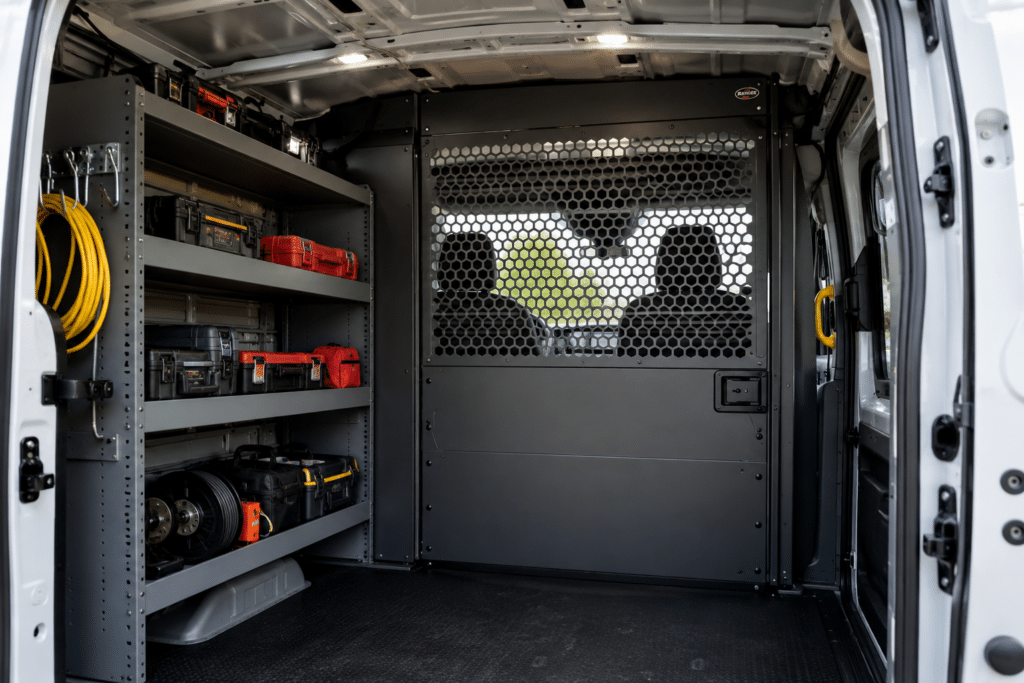
Many trades businesses invest heavily in tools, shelving, and equipment, but overlook one of the most important safety components inside a commercial van: cargo separation. In busy service environments across Cambridge, Kitchener, and Waterloo, work vans often carry heavy tools, materials, and supplies that can become dangerous if unsecured during sudden stops or collisions.
Without a partition separating the cab from the cargo area, loose equipment can shift forward unexpectedly. Even smaller tools can create serious hazards when a vehicle brakes hard or changes direction quickly. Proper van upfitting helps reduce these risks by creating a safer and more controlled vehicle interior.
What a Van Partition Actually Does
Van partitions are designed to separate the driver and passenger area from the cargo space behind them. This barrier creates a physical layer of protection between technicians and the equipment they transport every day.
Modern commercial van partitions are commonly installed in plumbing vans, electrical service vehicles, HVAC fleets, delivery vans, and contractor service vehicles. Depending on the setup, partitions can also improve organization by creating a cleaner division between the workspace and driving area.
In many commercial vans, partitions also help reduce noise from tools and materials shifting during travel. This creates a quieter driving environment and can reduce distractions for technicians who spend long hours on the road between job sites.
Some partition systems also include integrated door access, visibility panels, or locking features that support day-to-day operations. These options allow fleet managers to customize the vehicle layout based on the trade, vehicle size, and operational needs.
Common Safety Risks Inside Commercial Vans
Commercial vans often carry ladders, power tools, fasteners, pipe, fittings, compressors, and bulk materials. When these items are not properly secured, they can slide or tip during normal driving conditions.
One of the most common risks occurs during sudden braking. A toolbox or loose equipment container can move forward with significant force, potentially injuring the driver or passenger. In collision scenarios, unsecured cargo becomes even more dangerous.
Driver distraction is another issue many fleet operators underestimate. Rattling tools, shifting shelves, or unstable cargo can pull a driver’s attention away from the road. For contractors working on tight schedules throughout Kitchener-Waterloo, maintaining a safe and organized vehicle environment supports both safety and productivity.
Loose cargo can also damage equipment inside the van. Repeated shifting during transport may lead to broken tools, damaged inventory, or unnecessary wear on vehicle interiors. Over time, disorganized storage systems can increase replacement costs and reduce overall fleet efficiency.
For service businesses operating multiple vehicles, safety consistency becomes increasingly important. Standardized cargo management systems help reduce variability between vans and improve day-to-day operations for technicians moving between vehicles.
Types of Van Partitions Used in Commercial Vehicles
Commercial vehicle upfitting companies typically offer several partition styles depending on the intended use of the van.
Solid Partitions
Solid partitions provide maximum separation and protection between the cab and cargo area. These systems are commonly used in trades that transport heavy tools, equipment cases, or expensive materials.
Solid steel partitions can also improve temperature control inside the cab by reducing airflow from the cargo area. This can help maintain comfort for drivers during Ontario winters and summer conditions.
Mesh Partitions
Mesh partitions offer protection while allowing greater airflow and rear visibility. Some contractors prefer mesh systems because they create a more open interior feel while still helping prevent cargo from entering the cab.
These systems are often used in service vehicles where ventilation is important or where technicians frequently access tools throughout the day.
Windowed Partitions
Windowed partitions provide a balance between visibility and cargo separation. Clear panels can improve rear sightlines without sacrificing the safety benefits of a partition system.
The right partition choice depends on the type of trade work being performed, vehicle layout, and how equipment is stored inside the van.
How Partitions Improve Workflow and Organization
Van partitions do more than improve safety. They also help create cleaner cargo zones that support better organization and more efficient workflows.
When combined with proper van shelving, partitions help technicians maintain dedicated storage areas for tools, inventory, and equipment. This reduces clutter inside the cab and makes it easier to locate materials quickly at job sites.
A more organized van setup can reduce wasted movement throughout the workday. Technicians spend less time searching for parts and more time focused on customer work. Organized storage systems can also improve inventory tracking and reduce forgotten tools at job sites.
Many contractors also invest in additional van shelving systems to improve day-to-day efficiency inside service vehicles. When shelving and partitions work together, the entire vehicle becomes more functional and easier to manage.
Clean organization also creates a more professional appearance when technicians arrive at customer locations. For businesses operating in competitive trades markets, vehicle presentation can influence customer confidence and brand perception.
Why Fleet Operators Standardize Van Partitions
Many companies operating multiple vehicles choose to standardize fleet van upfitting across their service fleets. Consistent layouts improve familiarity for technicians and help simplify vehicle management.
When every van uses a similar partition and storage configuration, technicians can transition between vehicles more easily. This consistency reduces downtime and helps maintain productivity when vehicles are reassigned or serviced.
Fleet managers also recognize the liability benefits associated with improved cargo separation. Properly installed fleet van partitions help support safer driving conditions and reduce the risks associated with unsecured equipment.
For growing trades businesses, standardization can also simplify future expansion. New vehicles can be equipped using the same layout and workflow strategy already proven successful in existing fleet operations.
Businesses evaluating larger-scale fleet van upfitting projects often prioritize safety and organization improvements first because they directly affect daily operations.
Professional Installation Matters
Proper installation is critical for both safety and long-term durability. A poorly installed partition may loosen over time or fail to provide adequate protection during sudden impacts.
Professional installers ensure the partition is securely mounted to the vehicle structure while maintaining compatibility with shelving systems, door access, and cargo layouts. Proper fitment also reduces rattling, vibration, and unnecessary wear during daily use.
Many commercial vehicle operators also pair partitions with additional cargo management solutions such as shelving, drawer systems, ladder storage, and secure tool mounting systems.
Investing in professional van partition installation helps ensure the vehicle remains functional, organized, and safe over the long term.
Next Step for Trades Businesses in Kitchener-Waterloo
For contractors and fleet operators across Cambridge, Kitchener, and Waterloo, van partitions are a practical investment in both safety and efficiency. They help reduce cargo-related risks, support better organization, and create more functional work vehicles for technicians in the field.
Businesses planning new van builds or upgrading existing service vehicles should evaluate how cargo separation fits into their overall vehicle strategy. The right partition system can improve daily workflow while supporting safer driving conditions for technicians and crews.
To explore partition options and commercial van organization solutions, businesses can contact the team for a consultation on vehicle upfitting and fleet safety improvements.