

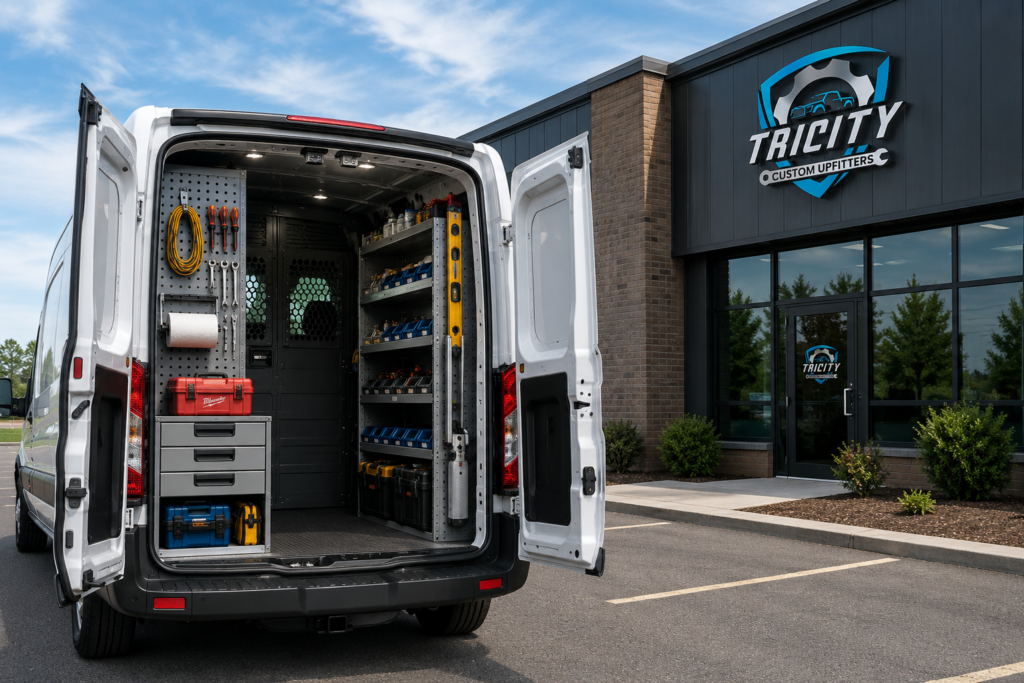
Commercial vehicles are much more than transportation. For contractors, service companies, and mobile workforces, a van functions as a mobile workplace that directly affects productivity, organization, safety, and customer service.
As businesses grow throughout Cambridge and the surrounding Tri-City area, many discover that factory cargo vans are not designed to support the demands of daily operations. Professional vehicle organization becomes increasingly important as tool inventories expand, service volumes increase, and teams become larger.
That is why more companies are investing in professional van upfitting solutions designed around their specific workflows and operational needs.
Why Work Vehicles Are More Than Transportation
A service vehicle often serves as a technician’s primary workspace throughout the day. Every tool, part, and piece of equipment required for a job must be stored, transported, and accessed efficiently.
When vehicles lack proper organization, technicians spend more time searching for equipment, managing clutter, and working around inefficient layouts. These small delays can accumulate into significant productivity losses over time.
A properly upfitted vehicle helps eliminate these challenges by creating a structured environment that supports efficient daily operations.
Businesses that view their vehicles as productive assets rather than simple transportation are often better positioned to improve workflow and customer service.
For many companies, vehicle efficiency directly affects revenue. The more efficiently technicians can move between jobs, locate equipment, and complete tasks, the more productive each workday becomes. This is one of the primary reasons commercial vehicle upfitting continues to gain attention among growing businesses throughout Cambridge.
What Professional Van Upfitting Includes
Professional van upfitting involves customizing a vehicle to support the specific needs of a business and its workforce.
This process often includes storage systems, equipment organization, safety enhancements, and workflow improvements designed to maximize efficiency.
Common upfitting components include:
- Shelving systems
- Van partitions
- Storage drawers
- Cargo management systems
- Ladder storage solutions
- Equipment mounting systems
- Fleet standardization upgrades
Rather than relying on generic cargo space, professional upfitting transforms a vehicle into a purpose-built mobile workspace.
The goal is simple: help technicians work faster, safer, and more efficiently while protecting valuable tools and equipment.
Professional upfitting also creates opportunities to design vehicle layouts around specific trades. Electricians, plumbers, HVAC contractors, telecommunications technicians, and delivery companies all have different operational requirements. A customized layout helps ensure equipment is stored where it is needed most, improving both accessibility and workflow.
The Hidden Cost of Poor Vehicle Organization
Many businesses focus on visible operating expenses while overlooking the hidden costs created by poorly organized vehicles.
Lost productivity is one of the most common issues. Technicians who spend time searching for tools, parts, or equipment are not spending time serving customers.
Disorganization can also lead to damaged equipment. Loose tools and materials often shift during transportation, increasing wear and creating avoidable replacement costs.
Longer service calls are another consequence. When technicians cannot quickly locate what they need, jobs take longer to complete.
Poor organization may also contribute to employee frustration. Working from a cluttered vehicle every day can create unnecessary stress and reduce overall efficiency.
Over time, these issues affect profitability, customer satisfaction, and operational consistency.
There is also the issue of inventory management. Without dedicated storage locations, technicians may struggle to track supplies accurately. Missing parts, duplicate purchases, and unnecessary trips to suppliers can all impact operational efficiency.
Many businesses do not realize how much time is lost until they compare an unorganized vehicle to a professionally upfitted one.
Why Cambridge Businesses Prioritize Efficiency
Businesses across Cambridge operate in competitive industries where efficiency directly impacts growth.
Contractors, HVAC companies, electricians, plumbers, telecommunications providers, and other service businesses often manage multiple appointments each day. Every minute saved can contribute to higher productivity and improved customer experiences.
Customers expect prompt service, accurate scheduling, and professional execution. Well-organized vehicles help support those expectations by allowing technicians to work efficiently and arrive prepared.
As local businesses continue to grow, many are investing in commercial vehicle upfitting as a practical way to improve operational performance without increasing workforce demands.
Efficiency is especially important for businesses managing labour costs, fuel expenses, and scheduling demands. Improving workflow inside the vehicle can help maximize the value of every technician’s time while supporting long-term growth objectives.
How Shelving Improves Daily Operations
One of the most valuable upfitting upgrades is professional shelving.
Dedicated storage locations help technicians quickly locate tools, inventory, and equipment while reducing clutter throughout the cargo area.
Businesses investing in van shelving often experience improvements in daily workflow because technicians spend less time searching for materials and more time performing productive work.
Shelving systems also improve inventory control by making supplies easier to track and replenish.
For growing businesses, organized storage creates consistency across vehicles and helps establish standardized operating procedures.
Proper shelving can be customized to accommodate specific equipment, frequently used parts, and industry-specific inventory. This allows technicians to maintain organization while reducing the risk of damaged tools or misplaced materials.
Companies interested in improving workflow may also benefit from reading How Van Shelving Improves Productivity for Contractors, which explores how organized storage directly impacts technician efficiency.
How Partitions Improve Safety and Organization
While shelving improves accessibility, partitions help improve safety.
A partition creates a barrier between the cab and cargo area, helping prevent tools, materials, and equipment from shifting toward occupants during sudden stops or collisions.
Professional van partitions also help reduce distractions caused by moving cargo while creating a cleaner separation between work and driving environments.
In addition to safety benefits, partitions often contribute to improved organization by clearly defining cargo zones within the vehicle.
Many businesses also appreciate the reduced noise levels partitions provide. Limiting cargo movement sounds can create a more comfortable driving experience for technicians who spend significant time on the road.
Businesses evaluating partition options may also find value in Choosing the Right Van Partition for Work Vehicle Safety, which explains the differences between common partition styles and applications.
Why Fleet Operators Standardize Vehicle Layouts
As companies grow, vehicle standardization becomes increasingly important.
When every service vehicle follows a similar layout, technicians can move between vehicles with minimal disruption. Tools, inventory, and equipment remain in predictable locations regardless of which vehicle is assigned.
Standardization also simplifies onboarding for new employees. Training becomes easier because storage systems and workflows remain consistent throughout the fleet.
Businesses managing multiple vehicles often invest in fleet upfitting solutions to support consistency, accountability, and long-term growth planning.
Standardized layouts also help fleet managers maintain equipment, track inventory, and ensure organizational standards are followed across the entire operation.
As businesses expand, standardized vehicle configurations can simplify purchasing decisions and support scalable growth strategies. New vehicles can be outfitted to match existing layouts, reducing operational disruptions.
Is It Time to Upgrade Your Work Vans?
Several indicators suggest it may be time to invest in professional upfitting.
Growing teams often require more tools, inventory, and equipment than factory vehicle layouts can effectively support.
Increasing service volumes may expose inefficiencies in vehicle organization that slow down technicians throughout the day.
Businesses operating multiple vehicles frequently benefit from standardized layouts that improve training and workflow consistency.
Frequent complaints about lost tools, cluttered cargo areas, or difficulty locating equipment are also common signs that vehicle organization needs improvement.
If technicians regularly spend time searching for equipment or reorganizing vehicles between jobs, professional upfitting may deliver measurable operational benefits.
Another common trigger is vehicle replacement. Many businesses use the purchase of a new van as an opportunity to improve organization, storage capacity, and workflow efficiency through a professionally planned upfitting strategy.
Next Step for Cambridge Businesses
For businesses throughout Cambridge, professional van upfitting is an investment in efficiency, organization, safety, and long-term operational performance.
Whether managing a single service vehicle or an expanding fleet, properly designed upfitting solutions can help technicians work more effectively while supporting a consistent customer experience.
By combining shelving, partitions, storage systems, and fleet standardization strategies, businesses can transform ordinary cargo vans into productive mobile workspaces that support daily operations and future growth.
Ready to improve the performance of your work vehicles? Request a consultation to design a van upfitting solution tailored to your business.