

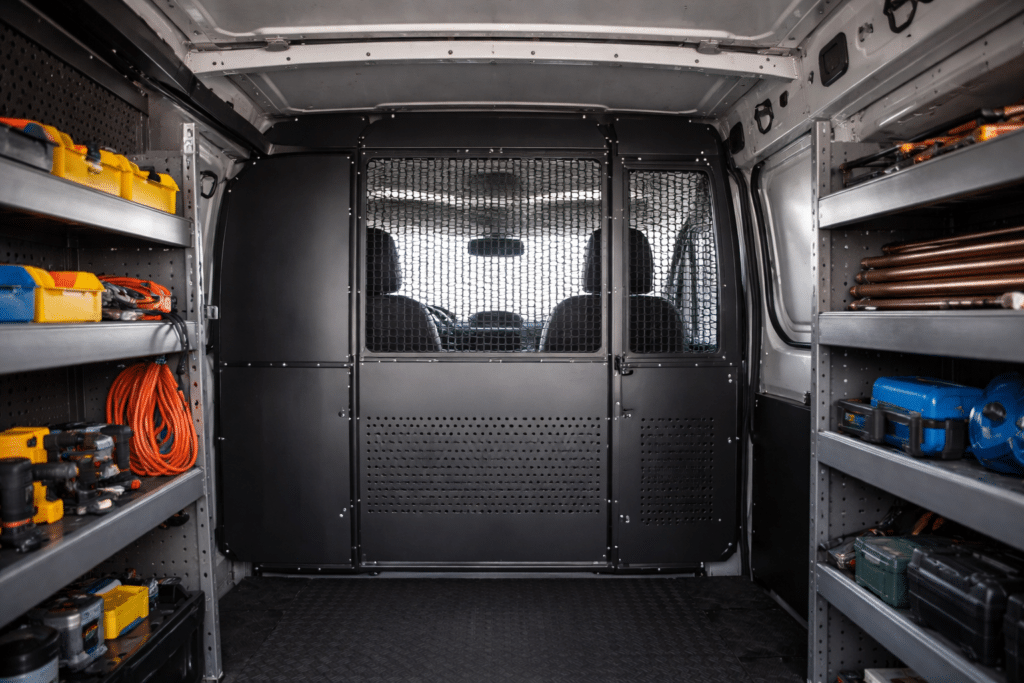
Many trades businesses treat van partitions as optional equipment rather than essential safety components. This often leads to poor decisions that affect driver protection, workflow, and long term vehicle usability. A properly selected partition does more than separate the cab from the cargo area. It plays a direct role in safety, efficiency, and overall job performance.
For businesses investing in van upfitting, overlooking the partition can undermine the value of the entire setup. It is one of the first elements that should be considered, not an afterthought.
Why Van Partitions Are Often Overlooked
Many contractors focus on shelving, storage, and tool organization when setting up a work van. These are visible and directly tied to daily tasks. Partitions, by comparison, are often viewed as a simple divider rather than a safety system.
Budget pressure also plays a role. When businesses try to control upfront costs, partitions are sometimes downgraded or skipped entirely. This short term thinking can lead to higher costs later through damage, inefficiency, or safety incidents.
In reality, partitions are critical for protecting drivers from shifting cargo and creating a controlled workspace inside the van. They also help define the layout of the vehicle, influencing how every other component is installed.
The Most Common Partition Mistakes
One of the most frequent mistakes is installing a solid partition without any visibility. While this improves security, it can reduce driver awareness and make reversing or monitoring cargo more difficult. This becomes especially problematic in busy job sites or urban environments.
Another issue is choosing the wrong material. Heavy steel partitions may offer strength but can add unnecessary weight, which affects fuel efficiency and payload capacity. On the other hand, lighter materials may not hold up under demanding conditions if they are not suited to the trade.
Airflow and cab comfort are also often ignored. A fully sealed partition can trap heat or cold in the cargo area, making the cab uncomfortable during long workdays. Over time, this affects driver fatigue and overall job performance.
Finally, many setups fail to consider tool access. Poorly designed partitions can block pass through options or make it difficult to retrieve materials quickly. This adds friction to everyday tasks and slows down productivity.
Types of Van Partitions Explained
There are several types of van partitions, each with advantages and limitations. Understanding these differences is key to making the right choice.
Solid steel partitions provide maximum protection and security. They are best suited for trades that carry heavy tools, equipment, or potentially hazardous materials. These partitions create a strong barrier that reduces the risk of cargo entering the cab during sudden stops.
Mesh partitions offer improved airflow and visibility. Drivers can see into the cargo area, and air can circulate more freely between sections of the van. These are often used in lighter duty applications where full impact protection is not required.
Windowed partitions sit between these two options. They provide solid separation while maintaining visibility through a built in window. This balance makes them a popular choice for many trades that need both safety and situational awareness.
Choosing between these options depends on the type of work being performed, the tools being transported, and the conditions in which the vehicle operates.
Safety and Liability Considerations
A properly installed partition protects the driver from loose tools and materials during sudden stops or collisions. Without it, even small items can become dangerous projectiles.
This is not just a safety concern. It is also a business liability issue. Injuries caused by unsecured cargo can result in lost work time, insurance claims, and potential legal exposure. For fleet managers, this risk multiplies across multiple vehicles.
Investing in proper work van safety solutions helps reduce these risks and supports a safer working environment. It also demonstrates a commitment to employee safety, which can improve retention and morale.
Workflow Impact of the Wrong Partition
The wrong partition can disrupt how work gets done on a daily basis. Restricted layouts, limited access, and poor integration with storage systems all contribute to inefficiency.
For example, technicians who cannot easily reach tools or move between the cab and cargo area may need to exit the vehicle more frequently. This adds time to each task and becomes significant over the course of a workday.
Partitions should work in coordination with shelving and storage systems, not against them. When paired with effective cargo management systems, the result is a smoother workflow and better use of available space.
A well planned setup reduces wasted motion, improves organization, and allows technicians to focus on the job rather than the limitations of their vehicle.
When Businesses Should Upgrade or Replace Partitions
As trades businesses grow, their vehicle requirements often change. What worked for a single technician may not be suitable for a larger team or more complex jobs.
Increased tool loads can put more stress on existing partitions, especially if they were not designed for heavier use. Safety concerns may also arise as equipment becomes more specialized or valuable.
Older partitions can also become outdated as new designs improve visibility, airflow, and integration with modern upfitting systems. Replacing them can lead to noticeable gains in both safety and efficiency.
For expanding operations, standardizing partitions across vehicles can simplify training and improve consistency. Partnering with professionals in fleet upfitting ensures that each vehicle meets the same performance and safety standards.
Choosing the Right Partition for Your Trade
Different trades have different priorities, and the right partition should reflect those needs.
HVAC technicians often require airflow to manage temperature differences between the cab and cargo area. A mesh or windowed partition may provide the right balance. Electricians typically carry a mix of small parts and larger tools, making visibility and organization equally important.
Plumbers frequently transport heavy equipment and materials, which makes durability and impact protection a higher priority. In these cases, a solid partition is often the better choice.
Service technicians who move between locations quickly may benefit from pass through access, allowing them to retrieve items without leaving the vehicle. Each decision should be based on real working conditions rather than assumptions.
Taking the time to assess these factors leads to a more effective and safer vehicle setup.
Next Step for Local Trades Businesses
Choosing the right van partition is not just about selecting a product. It is about building a system that supports safety, efficiency, and long term reliability.
Businesses that approach this decision strategically can avoid common mistakes and create a work environment that supports their team. This is especially important in competitive service areas like Kitchener-Waterloo, where efficiency and professionalism directly impact customer satisfaction.
If your current setup is not meeting your needs, or if you are planning a new vehicle build, now is the time to evaluate your options. The right guidance can make a significant difference in the outcome.
To get expert advice tailored to your trade and fleet, reach out through the contact page and start building a safer, more efficient work van setup.