

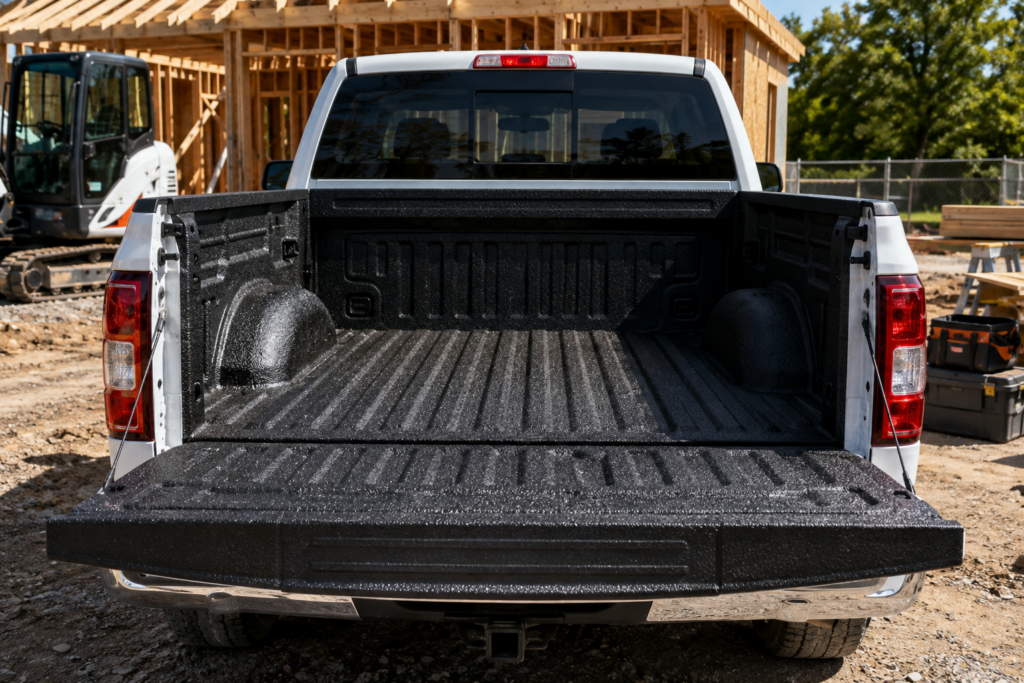
Truck Beds Take More Abuse Than Many Owners Expect
A pickup bed can face repeated contact with tools, equipment, building materials, debris, and other cargo. For contractors and trades professionals, loading and unloading may happen several times throughout the workday, while exposure to weather creates another consideration for an unprotected bed.
The right truck bed protection depends on how the pickup is actually used. A spray-in bed liner, drop-in liner, or bed mat can each serve a purpose, but they provide different types of coverage and involve different tradeoffs.
Rather than assuming one solution is automatically best, truck owners should consider what they carry, how often they use the bed, and whether they want permanent or removable protection.
What Does a Spray-In Bed Liner Actually Do?
A professionally applied spray-in liner creates a protective coating that conforms to the shape of the truck bed. Unlike a removable liner, there is no separate liner structure sitting inside the pickup box.
This allows the coating to follow the bed floor, sidewalls, wheel wells, and other treated surfaces. For owners considering professional installation, a LINE-X spray-in bed liner is one truck bed protection option available through Tri-City Custom Upfitters.
The important distinction is that spray-in protection is intended to become a permanent part of the treated bed surface. This makes it fundamentally different from products designed to be placed into the bed and removed later.
Spray-In Bed Liners vs Drop-In Bed Liners
Drop-in and spray-in liners approach pickup truck bed protection differently. A drop-in liner is a separate structure fitted into the pickup box, while a professionally applied spray-in liner conforms directly to the treated bed surfaces.
Removability can be an advantage for an owner who specifically wants a liner that can be taken out. However, a removable liner is still a separate component, so its fit and potential movement within the bed are considerations when comparing options.
A spray-in liner eliminates the separate liner structure and provides fitted coverage over the areas where the coating is applied. This can appeal to owners who expect to keep the protection in place for the long term.
Cleaning requirements should also be considered. Truck owners should think about the materials they regularly carry, where dirt and debris may collect, and how easily they want to access the original bed surface.
Neither option should be selected solely because one category is assumed to outperform the other in every situation. The more useful comparison is whether permanent fitted coverage or a removable liner better matches the truck’s workload.
Spray-In Bed Liners vs Bed Mats
A bed mat solves a more limited problem. It primarily covers the floor of the pickup bed, which may be sufficient for an owner focused on protecting the area where cargo is placed.
A spray-in truck bed liner provides broader coverage because it can be applied to the bed floor, sidewalls, wheel wells, and other treated areas. That distinction becomes more relevant when cargo regularly contacts more than the floor.
For example, a contractor carrying tools, materials, and equipment may routinely use the entire pickup box. Another owner who occasionally carries relatively simple cargo may decide that removable floor protection meets their needs.
A bed mat can also appeal to someone who does not want permanent protection. The decision comes back to how much coverage is required and whether removability is important.
What About DIY Bed Liner Products?
DIY truck bed coating products offer another alternative, particularly for owners focused on reducing the initial cost of the project. However, the comparison involves more than the price of the coating.
Surface preparation, application consistency, coverage, finish quality, and the time involved all need to be considered. The final result depends not only on the product but also on how the application is completed.
This becomes particularly relevant when appearance and consistent coverage matter to the owner. A work truck may also experience frequent bed use, making the quality and suitability of the completed application an important consideration.
Professional bed liner installation places the preparation and application work with an installer. Owners can then evaluate the professional coating options available for their particular truck and intended use rather than managing the application themselves.
Not Every Spray-In Bed Liner Is the Same
Choosing spray-in protection is only the first decision. Truck owners should also understand the specific coating options offered by the installer instead of assuming every spray-in product has identical characteristics.
Tri-City’s standard spray-in bedliner is described as a permanently bonded coating for personal pickups and work trucks. Tri-City positions the Standard option for long-term protection against corrosion, impact damage, and demanding commercial use.
Owners who want to compare available levels of spray-in protection can also consider the premium bedliner. According to Tri-City’s product information, LINE-X Premium combines abrasion and impact protection with added UV protection and fade resistance.
Those additional characteristics may be relevant to an owner who places greater importance on maintaining the appearance of the bed liner during long-term outdoor exposure. The Premium product information also emphasizes its upgraded finish and long-lasting appearance.
This comparison illustrates why truck owners should ask what distinguishes the specific products offered by an installer. Choosing a spray-in bed liner does not eliminate the need to compare coating features.
Work Trucks Create Different Bed Protection Priorities
A pickup used primarily for personal transportation may experience relatively limited cargo-bed use. A contractor’s truck can have a much different workload.
Tools, equipment, building materials, parts, and job-site debris may move in and out of the bed throughout the week. Some trucks carry similar equipment every day, while others need to accommodate changing cargo depending on the project.