

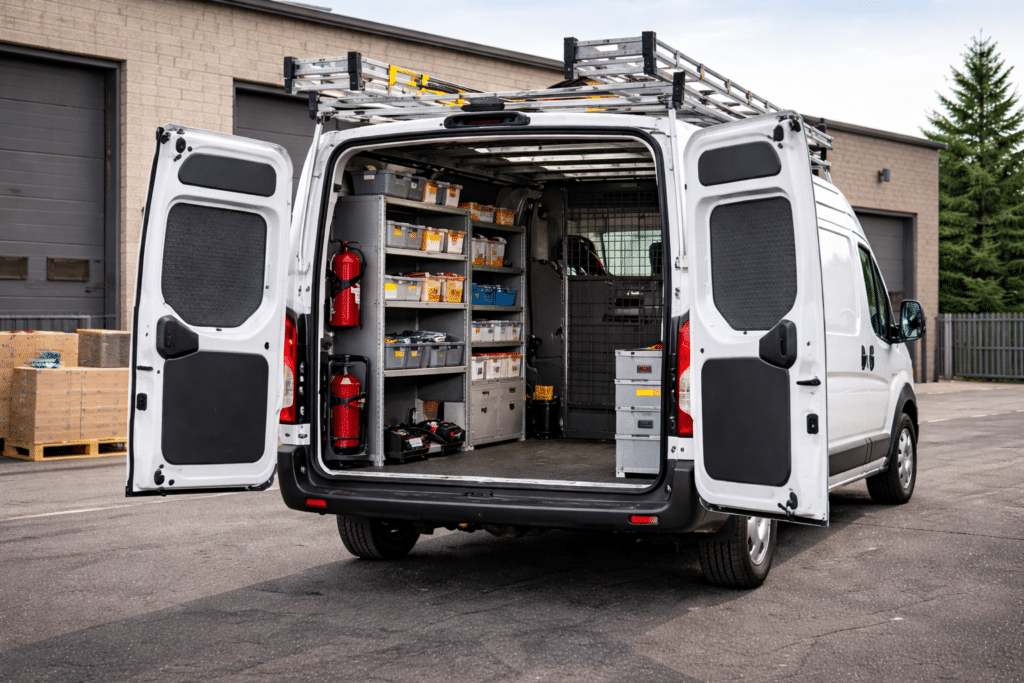
Fleet Van Upfitting in Kitchener-Waterloo: When Does It Make Financial Sense?
The Financial Question Most Fleet Owners Avoid
For many trades businesses in Kitchener, Waterloo, and Cambridge, the idea of upfitting several service vans at once can feel like a major expense. Shelving systems, partitions, and cargo organization upgrades require upfront investment, especially when applied across an entire fleet.
However, the real decision is not simply about purchase cost. It is about operational efficiency. Businesses that rely on mobile technicians often experience hidden productivity losses when vans are disorganized or inconsistently configured. Professional fleet van upfitting focuses on structured storage systems that reduce wasted time, improve safety, and support more consistent daily operations.
For growing service companies, the question becomes whether those hidden inefficiencies are already costing more than a properly organized fleet. When technicians spend less time searching for tools and more time completing work, the operational impact becomes clear.
When Fleet Size Changes the Equation
A business operating one or two service vans may be able to manage informal organization. A technician who drives the same vehicle every day can adapt to a personalized layout and still maintain efficiency.
Once a company operates three or more service vehicles, inconsistencies begin to create operational friction. Each van may be organized differently. Tools may be duplicated across vehicles because inventory visibility is limited. Technicians switching vehicles may lose time locating equipment.
Standardized layouts help address these problems. With structured van upfitting, shelving systems, drawer units, and partitions follow a consistent design across vehicles. Tools remain in predictable locations, making it easier for technicians to move between vans without disrupting workflow.
Consistency also helps supervisors maintain better oversight of tools and materials. When layouts are standardized, equipment audits and inventory checks become easier to perform.
The Hidden Costs of Disorganized Work Vans
Disorganized vans rarely appear as a clear financial problem on a balance sheet. Instead, the costs show up through small operational inefficiencies that accumulate over time.
Technicians may spend several minutes searching for tools or materials that should be easily accessible. Equipment can shift during transport and become damaged. Businesses sometimes purchase duplicate tools because no one is certain what is already stored inside a vehicle.
These issues extend job completion times and reduce productivity. Over the course of a full workday, those delays can add up to a significant amount of lost labor time.
Structured cargo management solutions address these problems by creating dedicated storage zones. Shelving units, bins, and containment systems keep tools secure and visible, allowing technicians to access equipment quickly without disrupting other materials.
Improved organization also protects expensive tools. When equipment is secured properly, the risk of damage during transportation is significantly reduced.
Safety and Liability Risks
Safety is another important consideration when evaluating fleet upfitting. Unsecured tools and materials can shift during transportation or sudden braking. Without proper containment, heavy equipment may move forward toward the cab area.
Partitions installed between the cab and cargo space help separate the driver from stored equipment. This barrier improves safety while also creating a structured mounting surface for shelving systems.
Exterior storage can also play a role in reducing hazards inside the van. Equipment such as ladders or long materials can be stored on properly installed back racks and ladder racks rather than inside the cargo area.
Visibility is another factor, especially for technicians working early in the morning or along roadways. Commercial-grade safety lighting can improve job site visibility and alert nearby drivers to the presence of a work vehicle.
While no system eliminates risk entirely, structured storage and proper equipment mounting reduce preventable hazards in daily operations.
Standardizing Vans Across the Fleet
Consistency across vehicles is one of the biggest advantages of fleet upfitting. When every van follows a similar layout, technicians know where to find tools and materials regardless of which vehicle they are driving.
This consistency simplifies onboarding for new employees. Instead of learning a different setup for each vehicle, technicians learn one standardized system. Supervisors can also perform equipment checks more easily when tool locations are consistent.
Fleet standardization also helps with vehicle replacement planning. When an older van is retired, the replacement vehicle can be outfitted with the same shelving and storage layout. This continuity ensures that workflow remains uninterrupted.
Commercial vehicle upfitting becomes part of long-term operational planning rather than a one-time upgrade.
When Fleet Upfitting Makes Financial Sense
Fleet van upfitting tends to make the most sense when a business begins to scale its operations. Several indicators often signal that an upgrade may provide operational benefits.
Common triggers include:
- Three or more active service vans in operation
- Technicians relying on a wide range of tools throughout the day
- Frequent transportation of materials between job sites
- A growing workforce that requires consistent equipment setups
- Increasing vehicle downtime caused by disorganization
When these factors appear together, inefficiencies can multiply quickly across a fleet. Investing in organized storage systems can help businesses regain control over workflow and scheduling.
The objective is not customization for appearance. The focus is improving daily efficiency and supporting long-term operational stability.
What a Fleet Upfitting Assessment Should Include
Before investing in upfitting solutions, businesses should evaluate how their technicians actually work in the field.
A fleet assessment typically begins with reviewing the tools and materials carried in each vehicle. Understanding tool inventory helps determine what type of shelving, drawers, and storage compartments are required.
Workflow analysis is another important step. Frequently used tools should be positioned in easily accessible areas, while less frequently used equipment can be stored in secondary compartments.
Weight distribution must also be considered when installing shelving systems. Proper placement helps maintain vehicle balance and ensures the van operates safely under load.
Finally, safety considerations such as partitions, ladder storage, and lighting should be reviewed to ensure the vehicle supports safe working conditions.
For businesses operating in Cambridge, Kitchener, and Waterloo, working with a local specialist can ensure the van layout reflects real job site conditions and daily technician needs.
Next Step for Kitchener-Waterloo Fleet Operators
Fleet van upfitting is most valuable when it aligns with how technicians actually use their vehicles. For companies experiencing workflow inefficiencies or expanding service teams, evaluating current van layouts can reveal opportunities for improvement.
A professional consultation can help identify storage improvements, safety upgrades, and layout adjustments that support long-term operational efficiency. To review your fleet needs and evaluate potential upgrades, request a fleet upfitting consultation.