

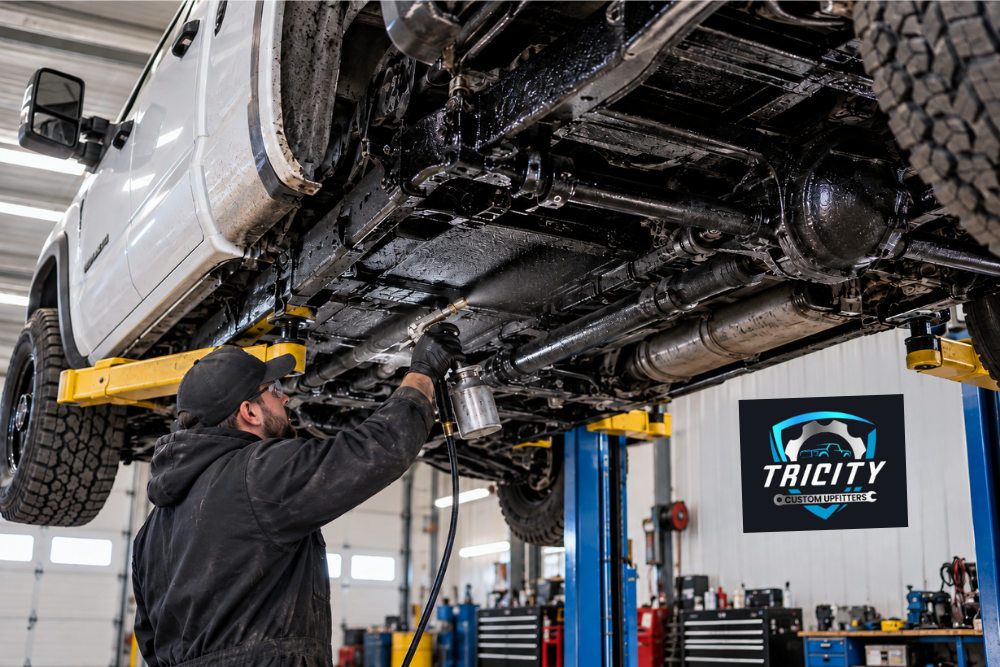
Work Trucks Spend Their Lives in Harsh Conditions
Work trucks and commercial vehicles operate in conditions that can be demanding on areas owners rarely see. Contractors, service businesses, and fleet operators may drive year-round through wet roads, winter conditions, construction sites, gravel lots, and areas where dirt and debris are part of everyday use.
For a business that depends on its vehicles, protecting the underside deserves consideration alongside maintaining the cab, truck bed, tires, accessories, and other visible components. Professional undercoating services in Cambridge can form part of a broader preventative vehicle-protection strategy for trucks that regularly operate in Ontario conditions.
The purpose is not to make unrealistic claims about eliminating corrosion. It is to consider how the vehicle is used and whether additional protection for exposed underbody areas makes sense.
What Undercoating Is Designed to Protect
Undercoating focuses on areas underneath the vehicle that are exposed to moisture, road treatments, dirt, gravel, and other materials encountered during normal driving.
These areas may receive less attention simply because they are not as visible as the body panels, truck bed, or interior. However, the underside of a commercial vehicle operates close to the road surface and can experience repeated environmental exposure throughout the year.
Undercoating should be viewed as a preventative protection measure. It does not guarantee that corrosion will never occur, and it should not be presented as a way to reverse existing corrosion.
The vehicle’s age, condition, environment, and intended use should all be considered before deciding on a protection approach.
Why Cambridge Driving Conditions Matter
Local driving conditions are important because Cambridge vehicles operate through changing Ontario seasons. Winter brings moisture, slush, road salt, and other winter road treatments that can reach exposed areas underneath a truck.
The challenge is also not limited to winter. Gravel, dirt, standing water, road debris, and changing weather conditions can affect working vehicles throughout the year.
For a contractor who drives between job sites several days per week, this exposure is repeated rather than occasional. A truck used throughout Cambridge, Kitchener, Waterloo, and surrounding areas may encounter a wide range of road and site conditions during a normal working season.
That makes local operating conditions a meaningful part of the undercoating decision rather than simply a reason to mention rust protection in general.
Commercial Vehicles Can Face More Exposure Than Personal Vehicles
Commercial vehicles are often used differently from personal vehicles. A contractor’s truck may travel more frequently, remain in service throughout the winter, and visit locations where mud, gravel, construction debris, and uneven surfaces are common.
A service vehicle may spend most weekdays travelling between customers. A trades truck may move from paved roads to active job sites several times in one day. A fleet vehicle may continue operating through conditions when a personal vehicle would remain parked.
Commercial use also means the vehicle is a working business asset. That does not mean every truck requires identical protection, but it does mean usage patterns should influence the protection decision.
A newer truck used lightly on paved roads may present a different situation from a vehicle that spends years travelling to construction, industrial, or service locations.
Waiting for Visible Rust Misses the Point
One misconception is that rust protection only becomes relevant once visible deterioration appears. That approach overlooks the preventative role of undercoating.
The better question is whether the vehicle’s present condition and working environment justify taking protective steps before problems become obvious.
Owners should consider how old the vehicle is, what condition it is currently in, how frequently it operates in winter, and how long the business expects to keep it in service.
Undercoating should not be described as a repair for existing corrosion. If deterioration is already present, the vehicle may require a different evaluation before any protective treatment is considered.
Undercoating and Bed Liners Solve Different Problems
Undercoating and truck bed protection are sometimes discussed together because both relate to protecting a working vehicle. However, they address different parts of the truck.
Undercoating focuses on vulnerable areas underneath the vehicle. A LINE-X bed liner addresses the pickup box and other high-use surfaces that can experience wear from loading tools, materials, equipment, and cargo.
A contractor carrying ladders, construction materials, toolboxes, or equipment may have reasons to protect both areas. One type of protection should not be treated as a substitute for the other because each addresses a different form of exposure.
Thinking about these areas separately helps owners make clearer decisions about what the vehicle actually needs.
Think About Protection When Building the Work Truck
Contractors often focus first on the accessories that make a truck more useful. Storage, racks, cargo solutions, and other work truck accessories can help configure the vehicle around a specific trade or workflow.
Vehicle protection addresses a different question. Instead of asking how the truck will carry equipment or support daily work, it asks how the vehicle will operate in the environment where that work takes place.
Considering both questions during the same planning process can make sense for a commercial vehicle that will be used regularly over several seasons.
The objective is not to add protection simply because the truck is used for work. It is to evaluate the vehicle, its operating conditions, and the owner’s expectations before deciding what measures are appropriate.
Undercoating Across a Commercial Fleet
For businesses operating multiple trucks or commercial vehicles, undercoating can become part of a broader vehicle-planning discussion.
Different vehicles within the same fleet may have different ages, duties, routes, and levels of exposure. A truck that travels to construction sites every day may face different conditions from a vehicle that primarily operates on paved urban routes.
Businesses can consider protection alongside other commercial fleet upfitting decisions when determining how each vehicle will be configured and used.
The goal is consistency in planning, not identical treatment for every vehicle. Fleet operators should still consider the condition and intended use of each truck rather than relying on a universal approach.
When Should a Cambridge Vehicle Owner Consider Undercoating?
Undercoating may be worth discussing when a vehicle operates year-round, regularly travels on winter roads, is used commercially, or frequently enters job-site environments.
It may also be relevant when the owner expects to keep the vehicle for the long term and wants to take a preventative approach to exposed underbody areas.
There is no single application schedule or protection decision that applies to every work truck. Vehicle age, current condition, driving environment, workload, and intended ownership period all matter.
A professional discussion should therefore begin with the actual truck and how it is used rather than a generic recommendation.
Protect the Parts of the Work Vehicle You Don’t See Every Day
The underside of a work truck receives far less attention than the cab, bed, or installed accessories, yet it operates in some of the vehicle’s most demanding conditions.
For Cambridge contractors and commercial vehicle owners, undercoating is best considered as part of a preventative strategy based on the vehicle’s condition, environment, and expected use.
Contact Tri-City Custom Upfitters to discuss undercoating options for a work truck or commercial vehicle and discuss undercoating for your vehicle.